
Knowing how to make a budget is one of the few money skills that pays off whether you earn a little or a lot. A budget is simply a plan for your money: a decision, made in advance, about where each month’s income will go. Without one, money tends to disappear into small, forgettable purchases. With one, you can see exactly what you have, what you owe and what you can safely save.
This guide shows you how to make a budget from scratch in five practical steps, compares the most popular budgeting methods, and covers the mistakes that make most first budgets fail. You do not need a spreadsheet or a finance degree. A notebook, your last two or three months of bank statements and about an hour are enough to begin.
This article is general education, not personalised financial advice. Rules, taxes and available accounts differ by country, so adapt the details to your own situation.
What Is a Budget (and What It Is Not)?
A budget is a written plan that matches your expected income to your expected spending and saving over a set period, usually a month. The US government’s consumer education site describes it as a plan that helps you see how much money you make and how you spend it, so you can find places to change. You can read its short guide on making a budget at Consumer.gov.
Just as important is what a budget is not:
- It is not a punishment. A good budget includes money for things you enjoy, so you can spend without guilt.
- It is not a one-time exercise. It is a living document you adjust as your life changes.
- It is not about perfection. If you are roughly right most months, the budget is working.
Why Budgeting Matters Before You Pick a Method
Many people avoid budgeting because they imagine tracking every cent. In practice, a budget does three useful things:
- It makes the invisible visible. Most people underestimate how much goes to small recurring costs until they see them listed.
- It turns goals into numbers. “Save more” is a wish. “Save 200 a month” is a plan.
- It reduces money stress. Decisions get easier when the boundaries are clear. If you often freeze when choices pile up, our guide on making better decisions when you are overwhelmed is a helpful companion.
How to Make a Budget From Scratch in 5 Steps
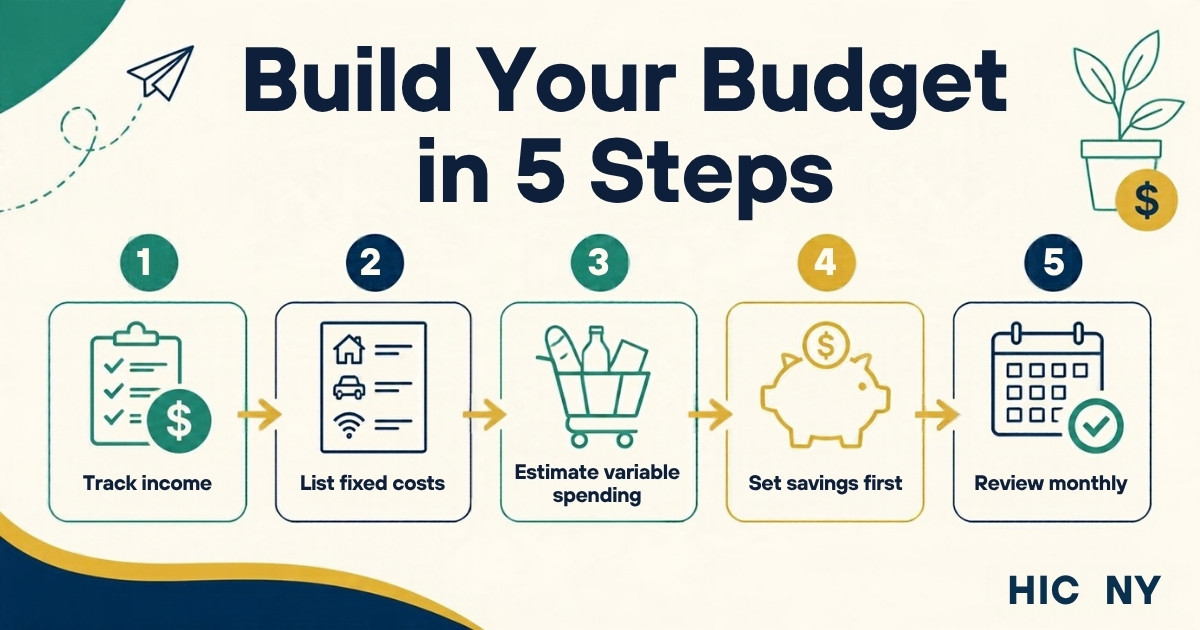
Step 1: Work out your real monthly income
Start with the money you actually take home, not your gross salary or what you hope to earn. Add up:
- Pay after tax and deductions
- Regular side income or freelance earnings
- Any other predictable income, such as rent received or allowances
If your income changes from month to month, use your lowest typical month as the budget figure and treat anything above it as a bonus to allocate later. This keeps a quiet month from wrecking your plan.
Step 2: List your fixed expenses
Fixed expenses are the bills that stay roughly the same every month and are hard to avoid. Pull them from your statements:
- Rent or mortgage
- Utilities, internet and phone
- Insurance
- Loan and credit card minimum payments
- Transport costs you cannot skip, such as a season ticket or car payment
- Subscriptions you have committed to
While you are here, check for forgotten subscriptions. Our subscription audit guide walks through finding and cancelling payments you no longer use. Every one you remove frees money for your goals.
Step 3: Estimate your variable expenses
Variable expenses change each month: groceries, fuel, eating out, clothing, entertainment, small repairs and gifts. This is where most budgets succeed or fail, so use real numbers. Look at the last two or three months of statements, total each category, and take an average. If you do not have statements, track your spending for one month in a notebook or notes app before you finalise anything.
Also include irregular costs that arrive once or twice a year, such as insurance renewals, school fees or holiday travel. Divide each by twelve and set that amount aside monthly. Without this, a single annual bill can derail an otherwise steady budget.
Step 4: Set your savings and goals first
Instead of saving whatever is left over, which is often nothing, decide your savings amount first and treat it as a bill you pay to your future self. Typical priorities, in rough order:
- A small starter emergency fund
- Minimum payments on all debts, then extra toward the most expensive debt
- A full emergency fund (see our step-by-step guide to building an emergency fund from scratch)
- Longer-term goals such as a home deposit, education or retirement
Automate the transfer on payday so you do not have to rely on willpower.
Step 5: Subtract, adjust and review
Now do the simple maths:
Income minus fixed expenses minus savings minus variable expenses = what is left.
If the result is positive, give the remainder a job: extra savings, debt payments or a clearly labelled “fun money” line. If it is negative, you are planning to spend more than you earn, which is exactly what the budget is meant to reveal. Trim the flexible categories, look for savings on fixed costs, or consider raising your income, until the numbers balance. Then review your budget at the end of each month and compare the plan with reality. Adjust the amounts, not the habit.
A Simple Budget Example
The figures below are illustrative and in any currency. Replace them with your own.
| Category | Monthly amount |
|---|---|
| Take-home income | 3,000 |
| Housing and utilities | 1,100 |
| Groceries | 450 |
| Transport | 200 |
| Insurance and minimum debt payments | 250 |
| Phone, internet and subscriptions | 100 |
| Savings (emergency fund and goals) | 400 |
| Extra debt payment | 100 |
| Personal spending and eating out | 300 |
| Buffer for irregular costs | 100 |
| Total allocated | 3,000 |
Every unit of income has a purpose and the total matches exactly. That is the core idea behind a working budget.
Choosing a Budgeting Method That Fits You
Once you have the basics, you can choose a system. None is universally best. The right one is the one you will actually keep using.
The 50/30/20 rule
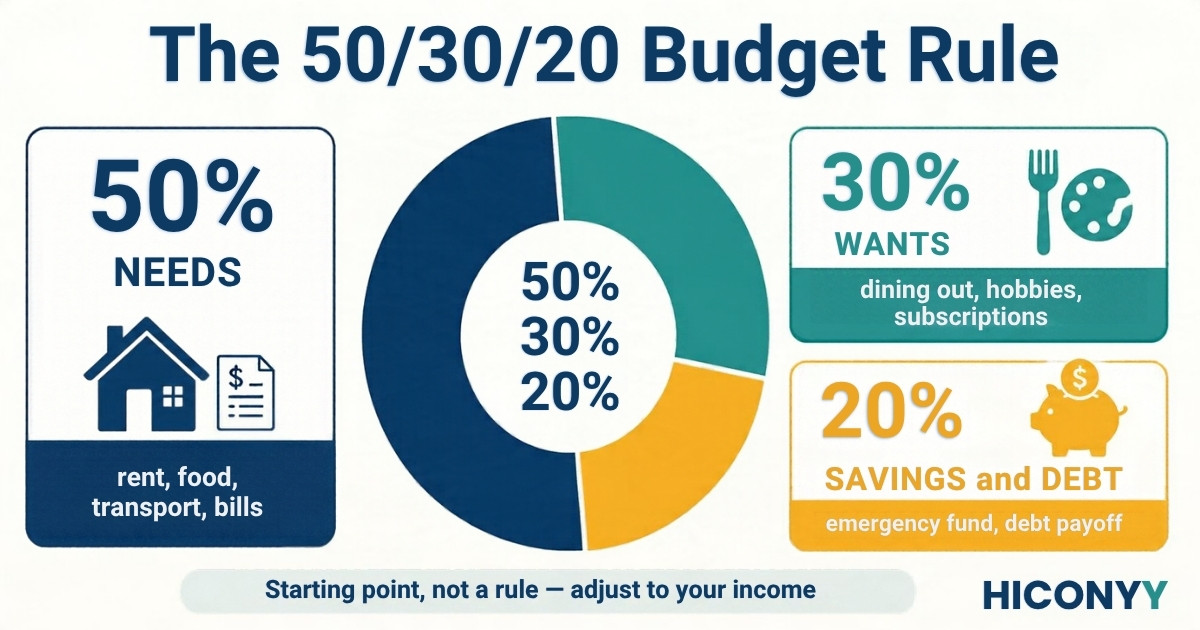
This popular framework, popularised by Elizabeth Warren and Amelia Warren Tyagi in the book All Your Worth, divides take-home pay into three buckets:
- 50% needs: housing, food, transport, insurance, minimum debt payments
- 30% wants: dining out, hobbies, streaming, non-essential shopping
- 20% savings and extra debt payments
It is a quick starting point, not a law. If housing is expensive where you live, needs may take more than half, and that is fine. Use the percentages as a check, then adjust.
Zero-based budgeting
With zero-based budgeting, every unit of income is assigned a job so that income minus planned spending and saving equals zero. The example table above works this way. It suits people who want tight control, have debts to clear, or earn irregular income.
The envelope or cash-limit method
You set a fixed amount for categories where overspending is easy, such as eating out or shopping, and stop spending when it runs out. Physical envelopes work, and so do separate bank accounts or app-based “pots”. It suits people who overspend in a few specific areas.
Pay yourself first
You automate savings the moment you are paid and spend the rest freely. It is the least detailed method, and works well for people who dislike tracking but are disciplined once the savings are out of sight.
| Method | Best for | Effort level |
|---|---|---|
| 50/30/20 | Beginners who want a simple guideline | Low |
| Zero-based | Debt payoff, irregular income, tight finances | High |
| Envelope / cash limits | Fixing one or two overspending categories | Medium |
| Pay yourself first | People who dislike detailed tracking | Low |
Tools for Tracking Your Budget
The best tool is the one you will open regularly. Common options include:
- Pen and notebook: simple, tactile and free
- A spreadsheet: flexible, and easy to customise with formulas
- A budgeting app: automatic imports save time, though you should review categories yourself
- A ready-made template or toolkit: useful if you want structure without building it yourself. Our budgeting toolkit review covers one option
Check the privacy policy before connecting any app to your bank account, and use strong, unique passwords.
Common Budgeting Mistakes (and How to Avoid Them)
- Being too strict. A budget with no fun money usually collapses within weeks. Include a guilt-free personal allowance.
- Forgetting irregular expenses. Annual bills, gifts and repairs are predictable in total even if the timing is not. Budget for them monthly.
- Using guesses instead of statements. Your memory underestimates spending. Use real data.
- Giving up after one bad month. Overspending is feedback, not failure. Adjust the numbers and carry on.
- Not including savings. If savings are last, they are usually zero.
- Never reviewing it. Income, prices and priorities change. A quick monthly check keeps the plan realistic.
How to Stick to Your Budget
- Pick one review day each month. Fifteen minutes is enough to compare plan and actual.
- Automate what you can. Standing orders for savings and bills reduce decisions.
- Use the 24-hour rule. Wait a day before non-essential purchases.
- Share the plan. If you live with a partner or family, agree on the budget together so it does not become a source of conflict.
- Celebrate milestones. A cleared debt or a first month under budget deserves recognition.
Budgeting With an Irregular Income
If you are a freelancer, work on commission or have seasonal earnings, the steps are the same with two changes. First, build the budget on your lowest typical month. Second, when you have a strong month, split the surplus: top up savings and your buffer first, then spend a small portion. Over time, aim to pay yourself a steady “salary” from a separate account so that your personal income feels predictable even when your earnings are not.
Frequently Asked Questions About Budgeting
How do I make a budget if I have never done it before?
Start with your take-home income and your last two or three months of statements. List fixed expenses, estimate variable ones, set a savings amount, and make sure the totals match. Review it after one month and adjust.
What is the easiest budgeting method for beginners?
The 50/30/20 rule is a simple starting point because it needs only three categories. Many people later move to a more detailed method as they learn their spending patterns.
How much of my income should I save?
A common guideline is around 20% of take-home pay for savings and extra debt payments, but the right amount depends on your income, costs and goals. Even a smaller regular amount is worth starting.
How often should I review my budget?
Once a month is a good rhythm. Also review it after any big change, such as a new job, a move or a major purchase.
What if my expenses are higher than my income?
That is exactly what a budget reveals. Look first for flexible savings, then for ways to lower fixed costs, and consider ways to raise income. Do not rely on credit cards to bridge a regular gap.
Should I budget weekly or monthly?
Plan monthly, since most bills and income run on monthly cycles. If you struggle with overspending, a weekly check-in on variable categories can help.
Your Next Step
You do not need a perfect budget, only a first draft. This week, gather your income figures and the last two months of statements, work through the five steps above, and set up one automatic savings transfer. Once your budget is running, put your first savings toward a cushion by following our guide to building an emergency fund.
For more practical money habits, browse our Personal Finance and Budgeting and Saving guides.